
Remote Simultaneous Interpretation (RSI)
Remote simultaneous interpretation delivers live interpreting through a software platform instead of a physical booth. Interpreters work from a hub or a certified home studio, the audience selects a language channel in the meeting app, and no one ships equipment. It removes travel cost and adds a hard dependency on audio quality.
What is remote simultaneous interpretation?
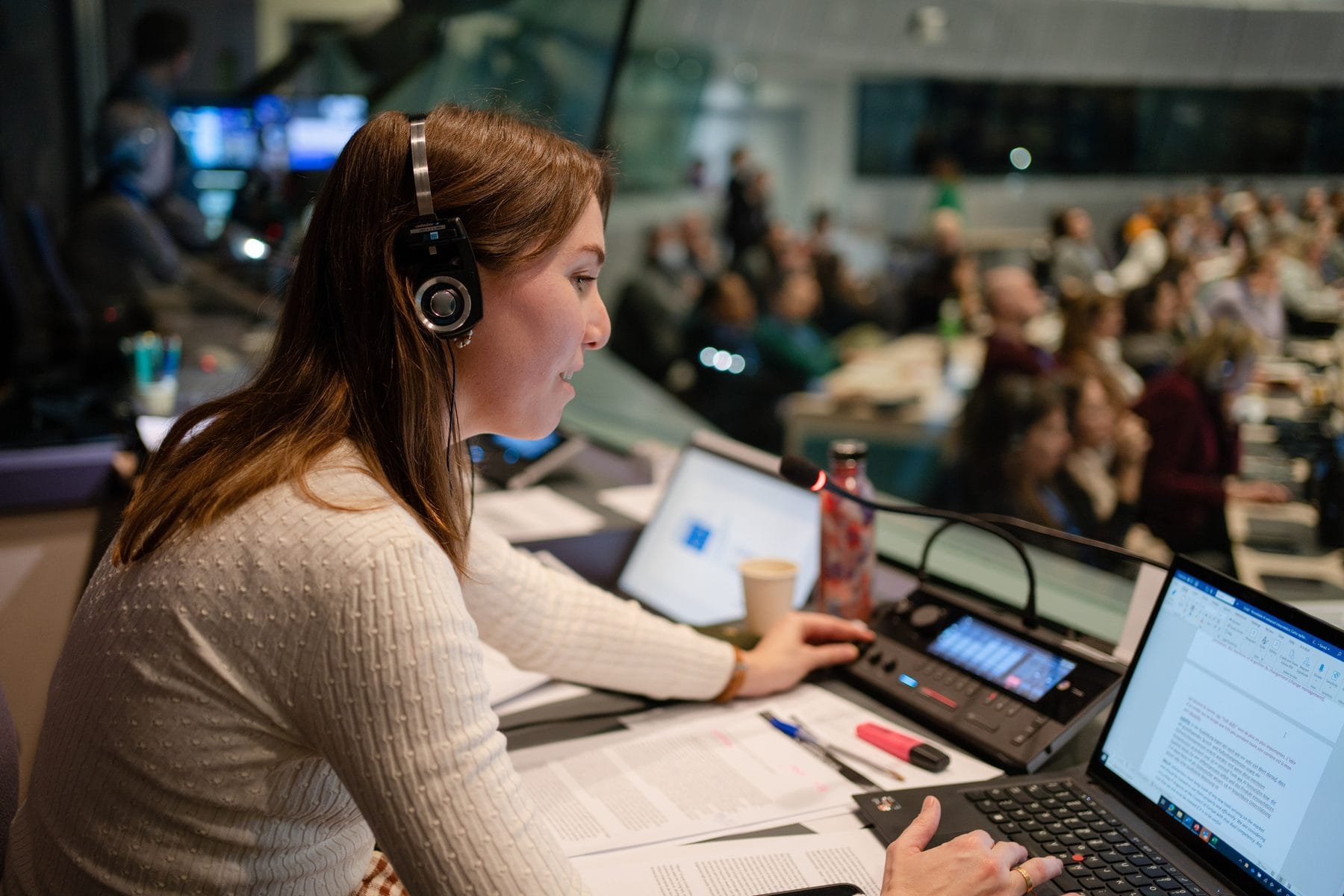
RSI is simultaneous interpreting delivered over the internet. The interpreters listen to the floor audio through a platform, speak into a dedicated language channel, and remote attendees pick that channel in their meeting app. The interpreting itself is unchanged; only the booth is replaced by software.
For distributed teams and multi-country webinars, RSI is usually the only proportionate option: the alternative is flying interpreters to a room that half the audience will never enter.
What RSI does not remove is the requirement for two interpreters per language on long sessions. Remote work is, if anything, more tiring than a booth — the audio is worse and the visual cues are thinner.
Does Zoom's interpretation feature need a separate RSI platform?
For straightforward bilingual meetings, Zoom's built-in interpretation is enough. Dedicated RSI platforms earn their cost when you need relay between booths, interpreter-to-interpreter handover cues, more than two or three languages, or a technician monitoring channels live.
- Zoom / Teams native: bilingual meetings, internal calls, low stakes
- Dedicated RSI platform: multilingual conferences, relay, live handover
- Hybrid venue + platform: in-room receivers plus online channels
What makes remote interpreting fail?
Bad input audio, almost every time. Laptop microphones, Bluetooth headsets, speakerphones and shared conference-room mics produce compressed, echoing sound that strips the consonants interpreters rely on. The interpreting collapses even though the platform, the interpreters and the connection are all fine.
The second failure mode is presenters reading fast from a script that the interpreters have never seen. Read speech runs far faster than spontaneous speech and carries none of the redundancy that makes live speech interpretable. Sending the script fixes it outright.
The third is the moderator forgetting the interpreted audience exists — no pause between speakers, overlapping voices, video played at full volume with no separate audio feed.
- Wired headset microphone for every speaker, no exceptions
- Ethernet, not Wi-Fi, for speakers and interpreters
- Send scripts and slides 72 hours ahead
- One person speaks at a time; the moderator enforces it
- Share video files in advance so audio can be routed cleanly
Is remote simultaneous interpretation cheaper than on-site?
Usually yes, because it removes travel, accommodation and booth rental — often the largest line items on an interpreted event. The interpreter fees themselves do not drop: the same two-person team per language is still required, and platform and technician costs partly offset the saving.
The honest comparison is total event cost, not day rate. A two-language, one-day event held remotely avoids flights, hotels, per diems and booth logistics; what it adds is a platform licence and, on anything serious, a technician monitoring the channels.
Can RSI cover a hybrid event with people in the room?
Yes, and it is now the common case. Interpreters work remotely while the interpreted audio is fed back into the venue's receiver system for in-room listeners and into the platform's language channels for online attendees. It requires an AV contact who can route the return feed.
Frequently asked questions
What is the difference between RSI and video remote interpreting?
RSI is simultaneous — the interpreter speaks while the speaker speaks, on a separate channel. Video remote interpreting usually means consecutive interpreting over video, where speaker and interpreter take turns, and it suits appointments and one-to-one conversations rather than conferences.
Do remote interpreters still need preparation material?
More than on-site interpreters, not less. Remote audio is thinner and the interpreter cannot read the room, so agendas, slides, scripts and glossaries carry more of the weight. Send them at least 72 hours out.
How many languages can one remote event run?
Dedicated RSI platforms handle a dozen or more language channels simultaneously; the practical limit is coordination and budget rather than software. Each added language means another pair of interpreters and, in relay setups, tighter dependency on the pivot booth.
Can you supply interpreters across different time zones?
Yes. Remote delivery means the interpreting team can be assembled wherever the right language and subject match sits, which is often the deciding advantage for events spanning the Americas, Europe and Asia in one day.
Planning a remote or hybrid event?
Send the platform, the languages and the run of show. We will confirm the team and flag anything in the setup that will hurt you on the day.
Request a quote